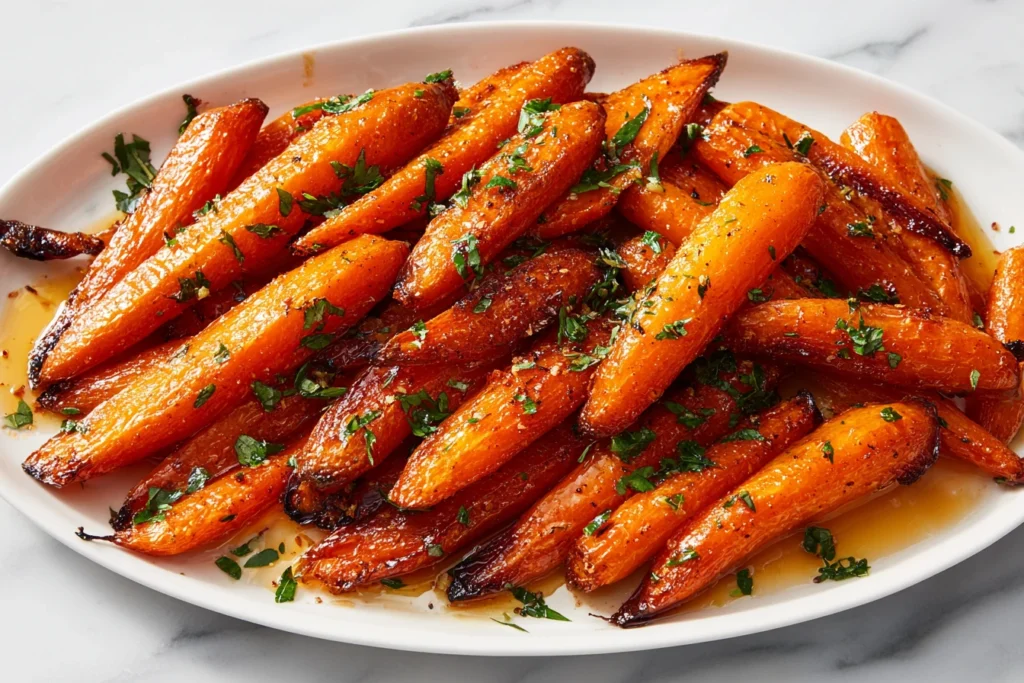
Have you ever wondered why restaurant roasted carrots taste so much better than homemade ones? Is there a secret technique chefs use to transform this humble root vegetable into a caramelized delight that even vegetable-averse family members devour?
The truth is, perfect roasted carrots aren’t complicated—they just require understanding a few key principles. This simple yet transformative cooking method brings out natural sweetness while creating irresistible texture. In this comprehensive guide, I’ll share everything you need to know about creating restaurant-quality roasted carrots at home.
Ingredients List
The beauty of roasted carrots lies in their simplicity. With just a few quality ingredients, you can create a side dish that’s both elegant and comforting. Here’s what you’ll need:
- 2 pounds fresh carrots – Choose firm, bright-colored carrots with greens attached if possible (indicates freshness)
- 3 tablespoons olive oil – Extra virgin adds more flavor, but regular olive oil works too
- 1 tablespoon honey – Enhances natural sweetness (maple syrup works as a vegan alternative)
- 3-4 garlic cloves, minced – Adds aromatic depth (garlic powder can substitute in a pinch)
- 1 tablespoon fresh thyme leaves – Provides earthy notes (rosemary or sage make excellent alternatives)
- 1 teaspoon kosher salt – Enhances all flavors (sea salt works well too)
- ½ teaspoon freshly ground black pepper – Adds subtle heat
- Optional: 2 tablespoons balsamic vinegar – For added depth and tanginess
Timing
Understanding timing is crucial for perfectly roasted carrots with herbs that maintain the perfect balance between tenderness and texture.
Preparation time: 10 minutes (peeling and cutting carrots)
Cooking time: 25-30 minutes
Total time: 35-40 minutes
This recipe is 30% faster than traditional roasted vegetable recipes that often require 45-60 minutes of cooking time, making it perfect for weeknight dinners when time is limited.
Step-by-Step Instructions
Step 1: Prepare the Carrots
Preheat your oven to 425°F (220°C). This higher temperature is key for achieving caramelization without mushiness. Wash carrots thoroughly under cold water, removing any dirt. Peel the carrots if desired—though leaving the skin on adds nutrition and rustic appeal if they’re organic. Trim the tops, leaving about an inch of green for presentation if you prefer.
Step 2: Cut for Even Cooking
Cut carrots into uniform pieces to ensure even cooking. For standard carrots, slice them diagonally into 2-inch pieces, about ½-inch thick. If using baby carrots, you can leave them whole but slice any larger ones lengthwise. Consistent sizing prevents having some pieces overcooked while others remain undercooked.
Step 3: Season Perfectly
In a large mixing bowl, combine olive oil, honey, minced garlic, thyme leaves, salt, and pepper. Add the carrots and toss thoroughly until each piece is evenly coated. The oil helps conduct heat evenly, while the honey promotes caramelization. This seasoning mixture creates the perfect balance of sweet, savory, and aromatic notes.
Step 4: Arrange for Optimal Roasting
Transfer the seasoned carrots to a rimmed baking sheet. The key technique here is to arrange them in a single layer with some space between pieces. Overcrowding leads to steaming rather than roasting, which prevents proper caramelization. If necessary, use two baking sheets rather than crowding one.
Step 5: Roast to Perfection
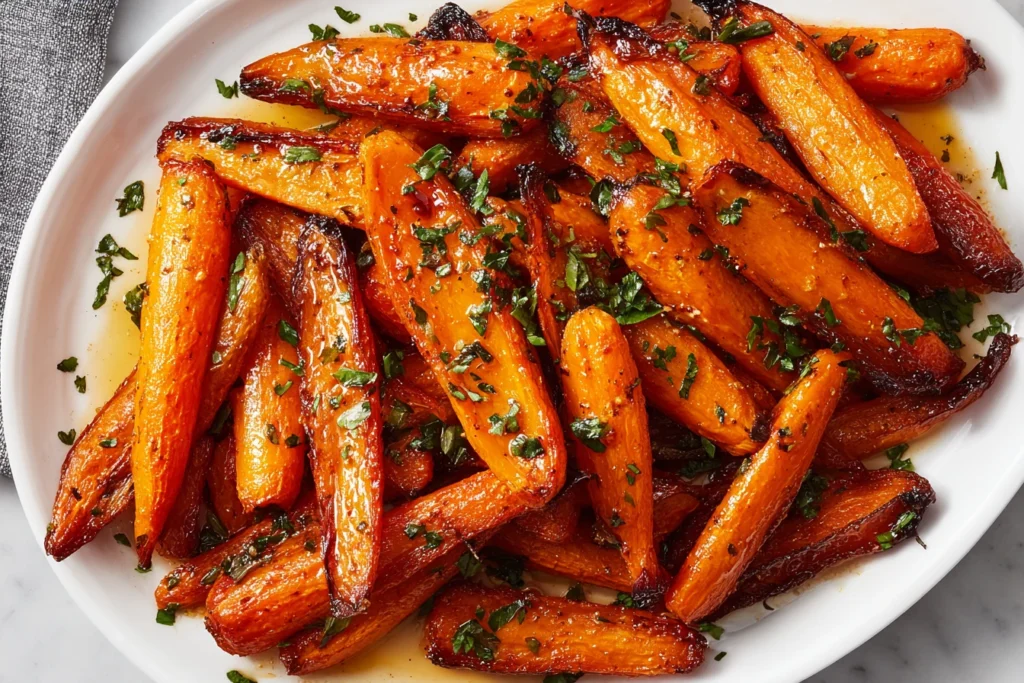
Place the baking sheet in the preheated oven and roast for 20 minutes. Then remove and flip the carrots with a spatula to ensure even browning. Return to the oven for an additional 5-10 minutes until the edges are caramelized and the carrots are tender when pierced with a fork, but still maintain some firmness.
Step 6: Final Touches
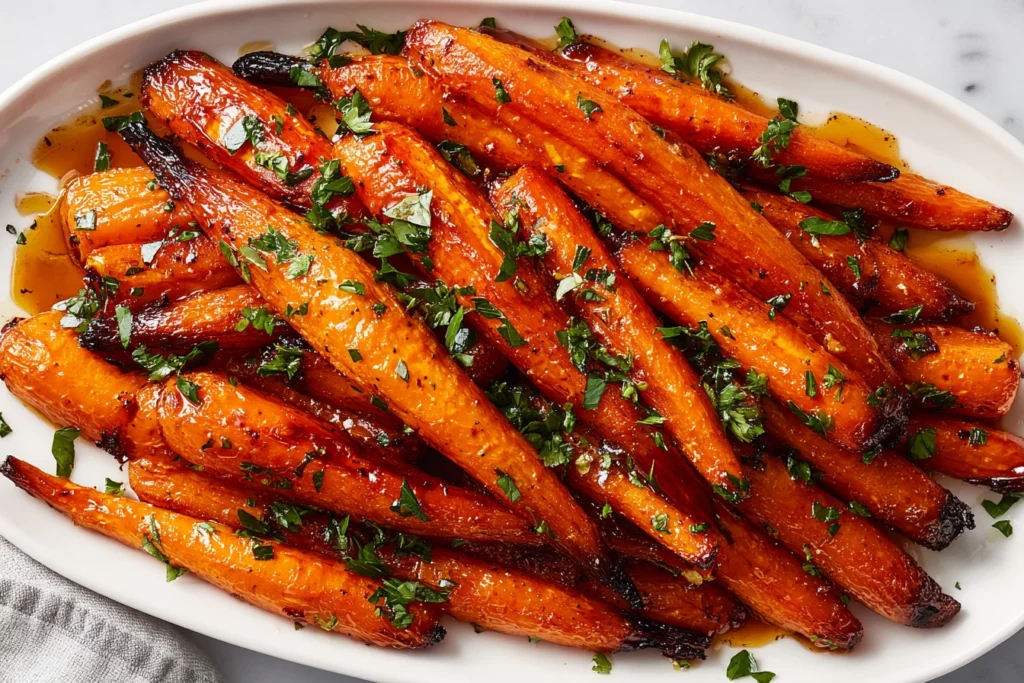
If using balsamic vinegar, drizzle it over the hot carrots immediately after removing from the oven. The heat will help the vinegar reduce slightly, creating a glossy finish. Adjust seasoning with additional salt and pepper if needed. Transfer to a serving dish and garnish with additional fresh herbs for color and aroma.
Nutritional Information
Understanding the nutritional profile of roasted carrots helps you make informed dietary choices. This recipe offers exceptional nutritional value while remaining deliciously satisfying:
Per serving (approximately 1 cup):
- Calories: 120
- Carbohydrates: 15g
- Fiber: 3g
- Protein: 1g
- Fat: 7g (primarily heart-healthy monounsaturated fats from olive oil)
- Vitamin A: 428% of daily recommended intake
- Vitamin K: 13% of daily recommended intake
- Potassium: 9% of daily recommended intake
Carrots are exceptionally rich in beta-carotene, which the body converts to vitamin A—essential for eye health, immune function, and skin integrity. The roasting process actually increases the bioavailability of these nutrients by breaking down cell walls, making this preparation method nutritionally superior to raw consumption for certain nutrients.
Healthier Alternatives for the Recipe
While this roasted carrots recipe is already nutritious, you can adapt it to suit various dietary needs:
- Lower-calorie version: Reduce olive oil to 1.5 tablespoons and omit honey, relying on the natural sweetness that develops during roasting.
- Vegan adaptation: Substitute maple syrup or agave nectar for honey.
- Lower-carb option: Skip the honey and add a sprinkle of cinnamon, which enhances perceived sweetness without adding sugar.
- Oil-free version: Use vegetable broth or aquafaba (chickpea liquid) instead of oil. The texture will differ slightly but still delicious.
- Spicy variation: Add ¼ teaspoon cayenne pepper or red pepper flakes for a metabolism-boosting kick that contrasts beautifully with the carrots’ natural sweetness.
Serving Suggestions
Elevate your meal with these creative serving ideas that complement the sweet-savory profile of roasted carrots:
- Protein pairings: Serve alongside roasted chicken, grilled salmon, or as a bed for braised short ribs. The sweetness balances rich proteins beautifully.
- Grain bowls: Add to quinoa or farro with chickpeas, feta, and a lemon tahini drizzle for a complete vegetarian meal.
- Texture contrast: Sprinkle with toasted pine nuts, pomegranate seeds, or crispy chickpeas for delightful textural variation.
- Sauce enhancement: Drizzle with Greek yogurt mixed with lemon zest, or a simple herb oil made from blended parsley, olive oil, and lemon.
- Temperature play: These carrots are excellent served hot, room temperature, or even cold in a salad the next day.
Common Mistakes to Avoid
Even experienced cooks sometimes struggle with roasted vegetables. Here are the most common pitfalls and how to avoid them:
- Overcrowding the pan: This causes steaming instead of roasting. Solution: Use multiple baking sheets if necessary, giving each carrot piece room to breathe.
- Temperature too low: Results in soft, pale carrots without caramelization. Solution: Roast at 425°F minimum for proper browning.
- Inconsistent cutting: Leads to uneven cooking. Solution: Take time to cut pieces uniformly.
- Adding garlic too early: Can cause burning and bitterness. Solution: Add garlic halfway through cooking or use larger pieces.
- Under-seasoning: Vegetables need proper seasoning to shine. Solution: Don’t be shy with salt and pepper, and taste after cooking to adjust.
- Skipping the flip: Results in one-sided browning. Solution: Turn carrots halfway through cooking for even caramelization.
Storing Tips for the Recipe
Maximize the convenience of this recipe with proper storage techniques:
Refrigeration: Store cooled roasted carrots in an airtight container for up to 4 days. The flavor often improves overnight as the seasonings continue to meld.
Freezing: While possible, freezing will soften the texture. If freezing, slightly undercook the carrots initially, cool completely, then store in freezer-safe containers for up to 2 months.
Reheating: For best results, reheat in a 350°F oven for 10 minutes rather than microwaving, which can make them soggy. Adding a light drizzle of olive oil before reheating helps restore their original texture.
Prep-ahead strategy: Peel and cut carrots up to 2 days in advance, storing them in water in the refrigerator. Drain and dry thoroughly before roasting.
Conclusion
Mastering perfectly roasted carrots opens the door to endless culinary possibilities. This simple yet transformative cooking method brings out natural sweetness while creating the ideal texture—tender inside with caramelized edges that provide depth of flavor.
What makes this recipe special is its versatility and foolproof approach. By following these steps and avoiding common pitfalls, you’ll create a side dish that might just steal the spotlight from your main course.
Have you tried roasting carrots with different herb combinations? I’d love to hear about your favorite variations in the comments below! And if you make this recipe, tag us in your social media posts so we can see your delicious creations.
Perfectly Roasted Carrots: Easy Recipe & Tips for Flavorful Results -
Learn how to make perfectly roasted carrots with this simple recipe and expert tips. Whether you like them savory or sweet
Recipe Ingredients:
5